
Prachuap Khiri Khan is stepping up efforts to mitigate the impact of drought ahead of the peak dry season, with authorities identifying 486 villages and communities across the province as being at risk of water shortages.
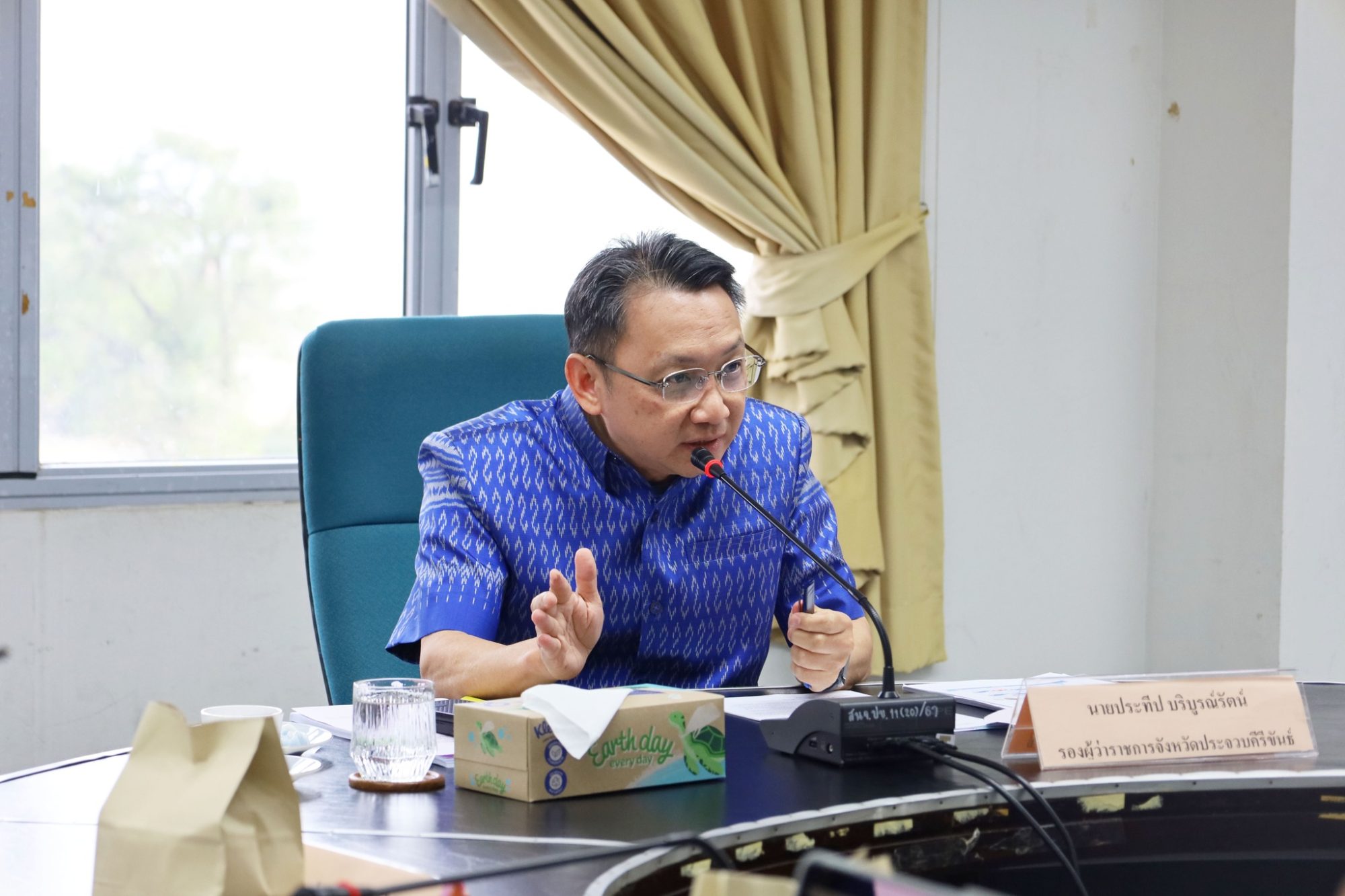
The measures were discussed at a meeting held on Friday, 21 March, at the Provincial Hall, chaired by Deputy Governor Prateep Boriboonrat. The meeting brought together officials from the Provincial Office of Disaster Prevention and Mitigation, as well as representatives from state enterprises, district offices, and local administrative organisations.
Of the 486 at-risk communities, 172 have been classified as high risk, including areas in all eight districts of the province. Hua Hin has 34 villages across five sub-districts identified as at risk, while Thap Sakae has the highest number of vulnerable areas, with 48 villages in six sub-districts.
In 2024, Prachuap Khiri Khan declared drought-related disaster zones across 33 sub-districts in all eight districts. Nearly 80,000 people from over 32,000 households were affected, and more than 14,600 rai of agricultural land suffered damage. A total of 15.2 million baht was allocated from the emergency relief budget to support those impacted.
Current figures from the Prachuap Khiri Khan Irrigation Project show that water levels in the province’s nine major reservoirs stand at 199 million cubic metres—about 39 percent of total capacity. While this represents an improvement over last year, officials are preparing for continued strain on resources.
Two medium-sized reservoirs, Pran Buri and Yang Chum, are supplying approximately 900,000 cubic metres of water per day for both consumption and agricultural use. Rainfall at the end of the 2024 wet season was close to the annual average, helping to ease concerns, but authorities warn that careful management remains essential.
Agricultural risk assessments presented at the meeting highlighted 690 rai of durian plantations in Pa La-u (Huai Sat Yai Sub-district, Hua Hin District) as being especially vulnerable. Livestock is also at risk, with 39 sub-districts across eight districts identified as needing support. To alleviate pressure on farmers, 16 stockpiles of hay and fodder have been set up, supported by the provincial and district livestock offices.
Clean water trucks have been prepared to supply communities facing shortages, particularly in areas like Huai Yang in Thap Sakae District, which was among the worst affected last year. Authorities noted that 889 water delivery trips were made, distributing more than five million litres of water. Efforts also included dredging over 10 water sources to improve storage and supply capacity.
Officials emphasised the importance of early intervention and coordination among agencies to ensure support reaches vulnerable communities in time.