
A seminar held in Hua Hin on Monday sought to clarify Thailand’s new tax regulations on foreign-sourced income and their implications for expatriates.
Organised by the Prachuap Khiri Khan Area Revenue Office, the event, titled “Know Tax, No Worry by The Revenue Regional 6 & Prachuap Khiri Khan Area Revenue Office,” took place on 17 February 2025 at Rajamangala University of Technology Rattanakosin, Wang Klai Kangwon Campus.
The seminar aimed to provide clarity on personal income tax requirements for individuals earning income from overseas sources, particularly in light of the new tax regulations that came into effect on 1 January 2024. The changes mandate that all foreign-sourced income brought into Thailand is taxable in the year it is remitted, regardless of when it was earned.
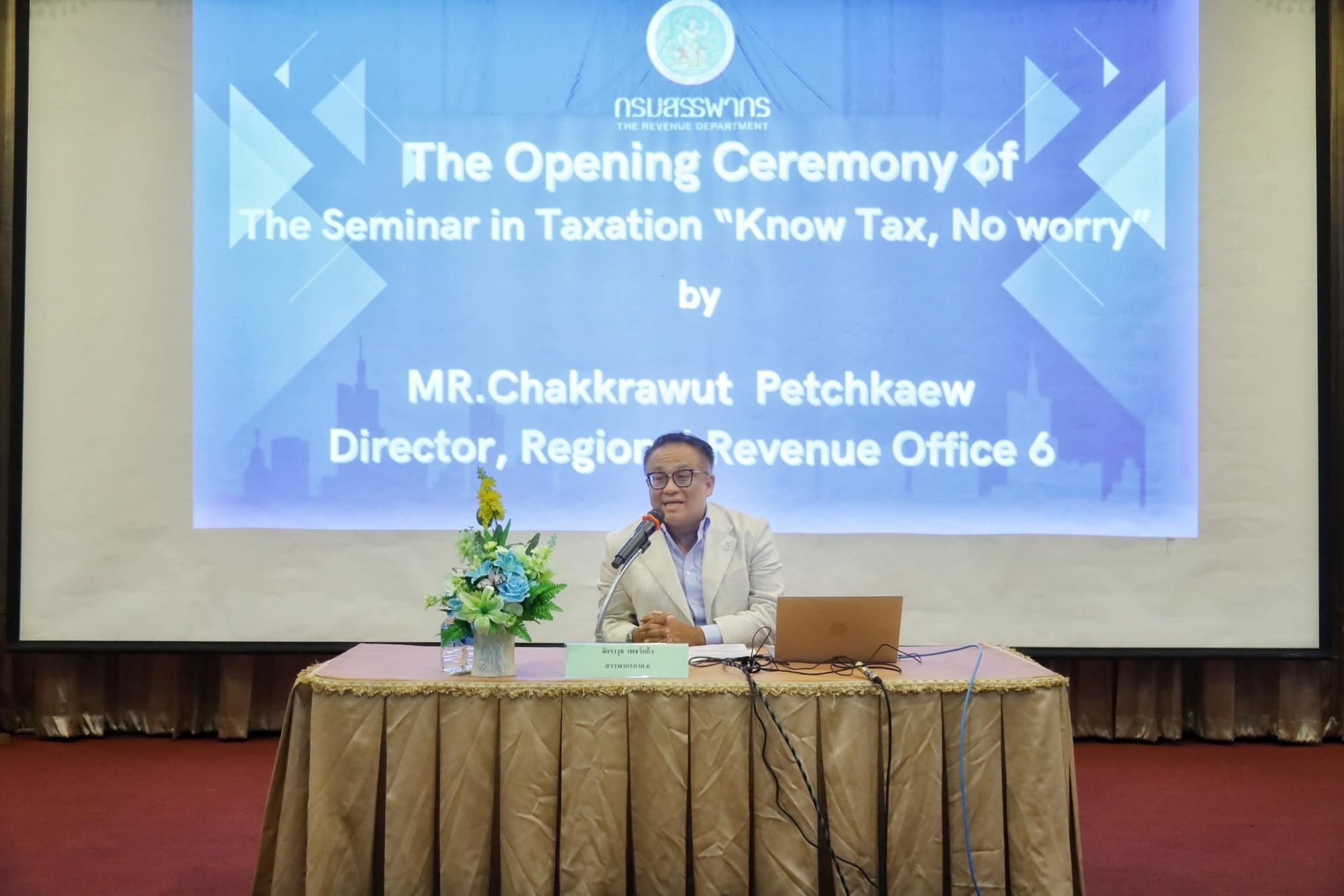
The seminar was one of the first occasions where expats had actually heard from tax officials on the matter, rather than relying on information and speculation presented by so-called experts on YouTube or other social media platforms.
Key clarifications provided at the seminar
The seminar was primarily targeted at accounting firms in the region and was conducted in English. Officials confirmed that expatriates residing in Thailand for at least 180 days within a tax year are classified as tax residents, meaning that any foreign income they transfer into Thailand is subject to taxation in that same year. The declaration period for such income runs from 1 January to 31 March.
Authorities also confirmed that Long-Term Resident (LTR) visa holders are exempt from these tax changes. Additionally, pensions are classified as taxable income, while savings accumulated before 2024 and inheritances remain untaxed.

Another major point of discussion was whether taxation would be linked to visa renewals. While no direct link was established between tax payments and the renewal of visas (or rather extensions of stay based on either retirement or marriage), an immigration representative attended the seminar, raising questions about potential future policy changes.
At present, only business visa holders are required to present tax clearance certificates when renewing their permission to remain in the country.
Property purchases and large transfers
Expatriates looking to purchase property in Thailand were advised that taxation on transferred funds depends on the source of income.
If the funds originate from savings accumulated before an individual became a tax resident, they are not subject to taxation. However, if the funds come from income earned while being a tax resident, they are taxable.

Furthermore, the Revenue Department confirmed that withdrawals or payments made using foreign bank cards are also declarable under the self-assessment principle.
Double Tax Agreements
A significant portion of the seminar was dedicated to Double Tax Agreements (DTAs) and how they affect expatriates.
Revenue Department officials clarified that:
- If a DTA states that income “may be taxed” in both countries, double taxation is possible.
- If a DTA states that income “shall be taxable only” in one country, it is taxed exclusively in that jurisdiction.
However, it should be noted that discussions with partner countries regarding tax credit mechanisms are ongoing, but no further details were provided. Two possible systems for claiming tax credits were outlined:
- Paying the full tax amount in Thailand and subsequently requesting a refund with supporting documentation.
- Deducting the tax credit directly at the time of declaration.
It was noted that the implementation of these mechanisms may vary between tax offices.
Expatriates in Thailand are advised to wait for further clarification regarding Double Tax Agreements.
Addressing concerns and misconceptions
Over the past year, Thailand’s new tax policies have been a major talking point within the expatriate community. The lack of clear official communication on the matter has led to widespread speculation, misinformation, and concerns about potential retroactive taxation.
One of the key clarifications made at the seminar was that the law was not specifically designed to target foreigners.

Instead, it aims to address the practice of Thai nationals transferring large sums from overseas without paying tax. The Revenue Department emphasised the principle of non-discrimination, stating that expatriates and Thai citizens are subject to the same tax regulations.
English language barrier at revenue offices
Meanwhile, the Hua Hin Revenue Department has acknowledged the language barrier faced by expatriates.
Foreigners who intend to visit the Hua Hin Revenue Department at their office located next to Baan Khun Por on Soi 88 are advised to take a Thai speaker with them who can act as an interpreter.
Signage advising as such is now being displayed at the office, stating:
“The official language is Thai. Foreigners are requested to bring an interpreter who can speak Thai.”
This move highlights the importance of bringing a Thai-speaking interpreter when seeking assistance with tax-related matters at government offices.
Looking ahead
Despite the clarifications provided at the seminar, several questions remain, particularly concerning the implementation of Double Tax Agreements, tax credits, and the potential enforcement of tax compliance during visa renewal processes.
Further proposed amendments, currently under legislative review, could introduce a “worldwide income” tax model, meaning all foreign income earned by Thai tax residents would be taxable, regardless of whether it is transferred to Thailand.
Expatriates in Thailand are advised to stay informed, keep detailed financial records, and consult professional tax advisers to ensure compliance with the new regulations.
The Revenue Department has indicated that discussions with international tax authorities are ongoing and that further updates may be provided in due course.